It starts with a look at the stock
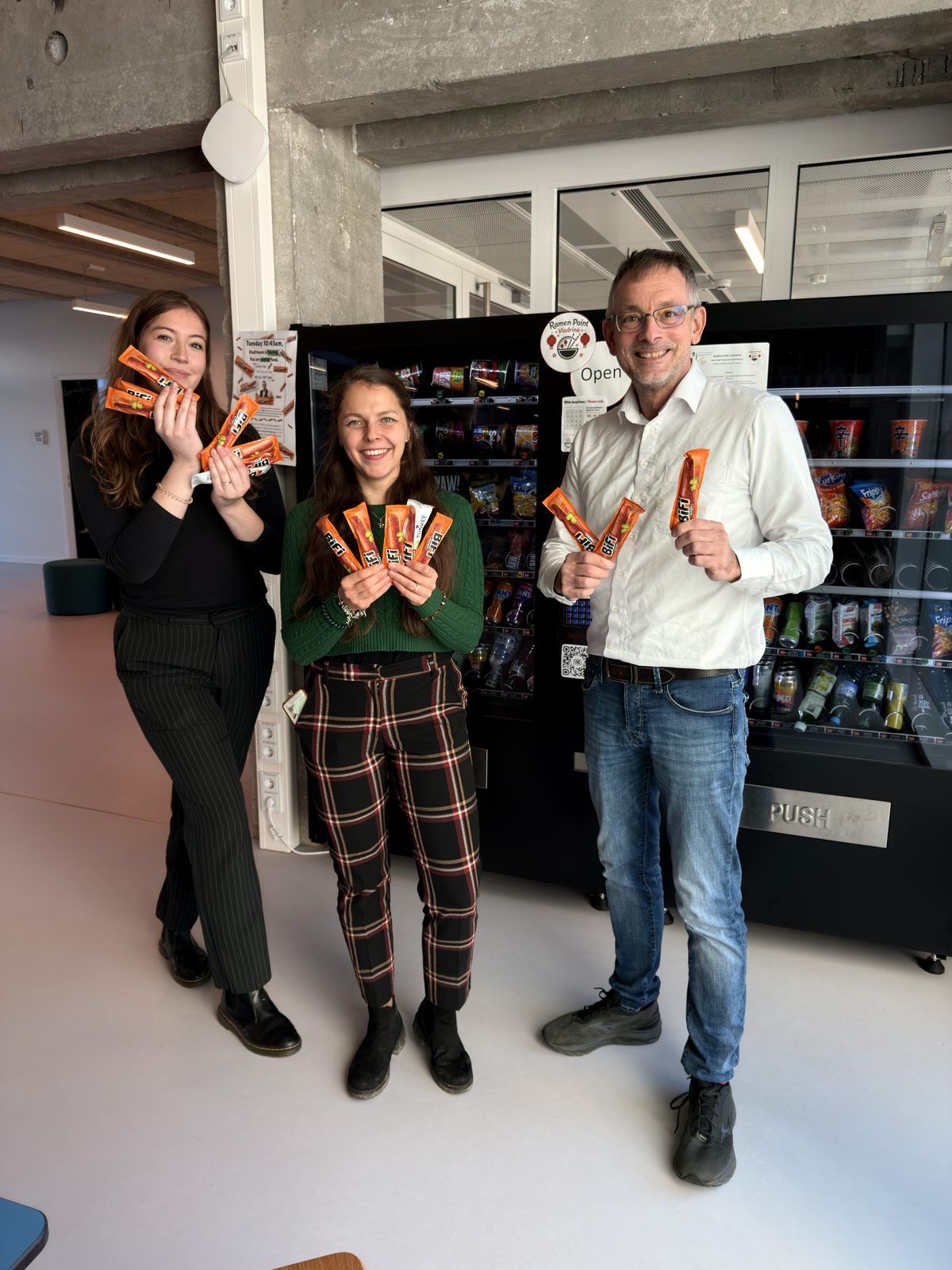
We’re sitting together when Julia notices something: part of her vending-machine stock is approaching its best-before date. The products are there, but the time to sell them is running out. Julia runs Ramen Point Viadrina; Alice brings the Food Be Good perspective.
Alice asks: which other products are affected? Julia remembers more items with short dates. One stock issue becomes a bigger question: How can we spot these situations earlier, and get the food to people in time?
We start thinking about a solution together. There’s a personal connection with the BiFis: Professor Georg Stadtmann had requested the snacks for the campus vending machine. Julia gets in touch with him.
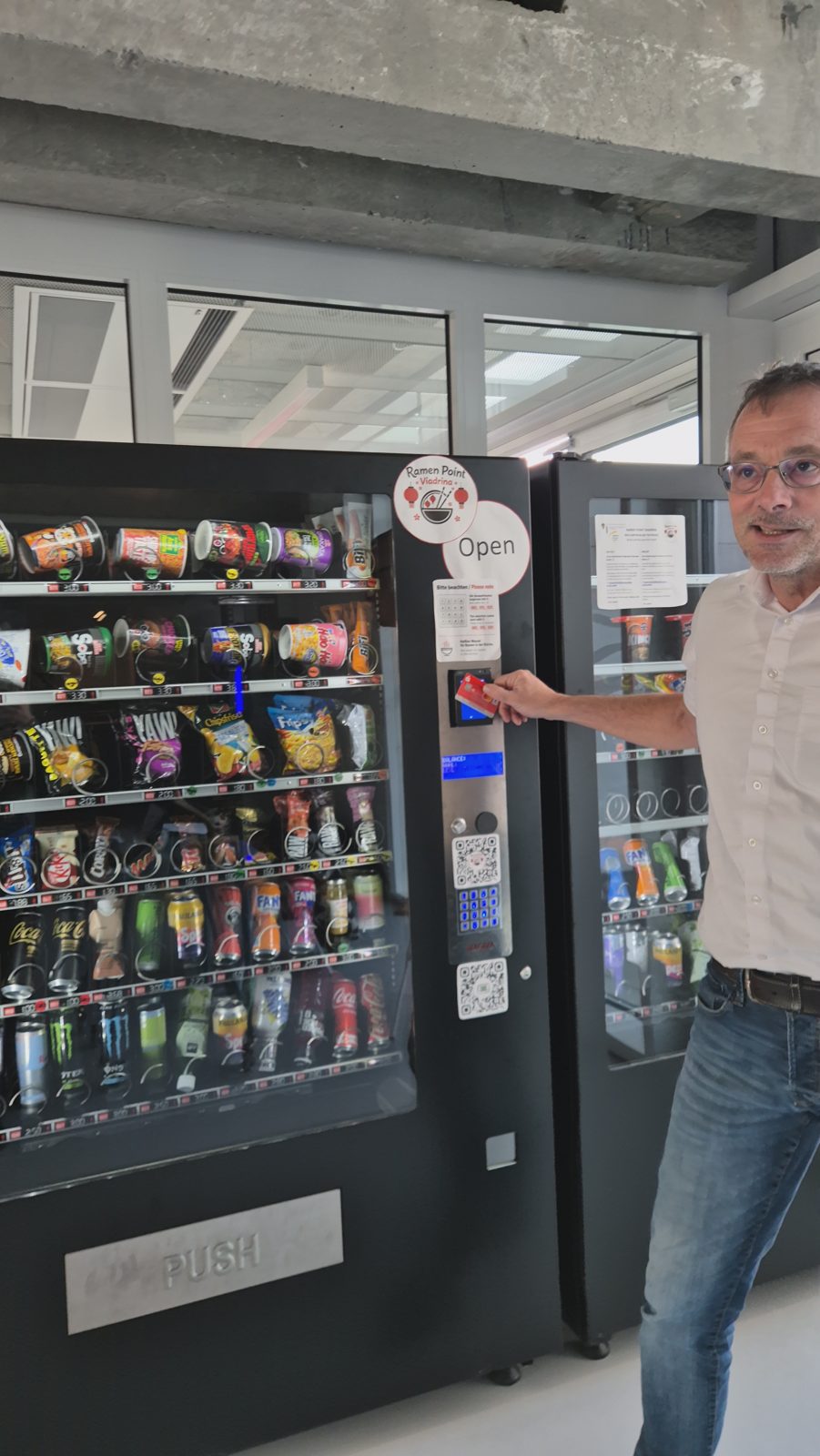
The professor reaches for his credit card
Stadtmann pays for BiFis to be handed out free to anyone interested. The macroeconomist who requested the product now contributes personally to a solution for the unsold stock.
Stadtmann pays directly at the machine. His product request becomes a personal gesture: the existing snacks should reach people and be eaten.
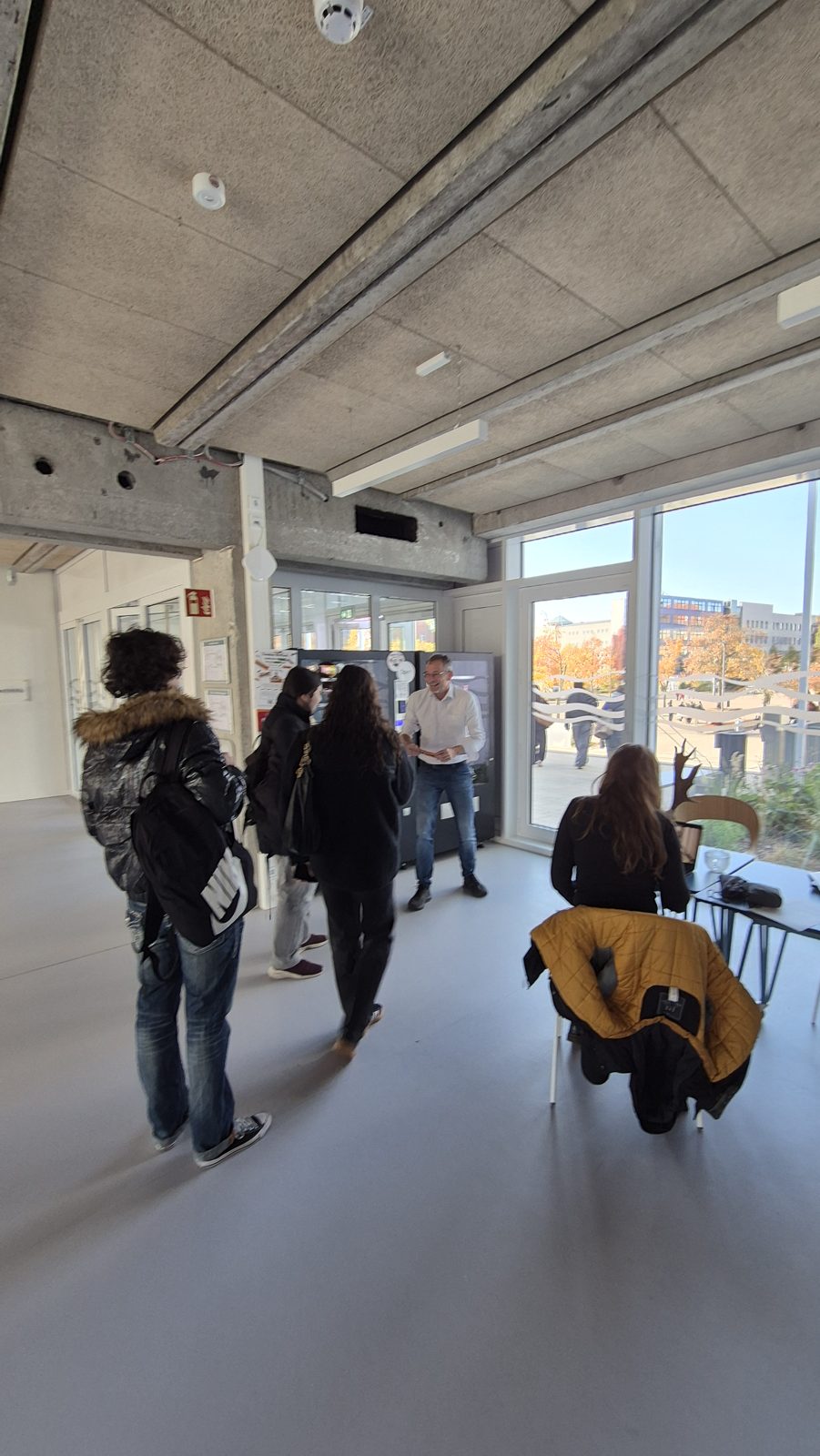
For Julia, stock is paid for. For students and others interested, these snacks are free. Food Be Good brings more than attention: together with Ramen Point Viadrina, we make the existing food tangible and its value understandable. We connect redistribution with the question of what goes into a snack before it reaches a machine, and what is lost if nobody eats it.
After 30 minutes, 30 sausages have been redistributed
Half an hour, 30 sausages handed out: that’s the result of our food rescue. Starting stock was 55 BiFis. The remaining 25 stay on regular sale for the next few days.
Both outcomes matter to us: food reaches people, and the moment makes them think. A small sausage becomes a conversation about resources, consumption and the value of food.
20 grams of snack. Around 170 grams of CO₂e.
How much climate impact can a small sausage contain? That question prompted some surprised reactions during the event. An indicative footprint of around 170 grams of CO₂ equivalents for a 20-gram portion puts an unassuming packet into a different perspective.
Food Be Good makes this invisible resource use understandable. Agriculture, processing, packaging and transport all sit behind the snack. If it is thrown away, those resources went into food nobody eats. Redistribution does not erase emissions already generated. But the food still fulfils its purpose instead of being discarded unused.
The AGRIBALYSE factor assigned through Open Food Facts gives a 20-gram comparison portion a footprint of 164.8 grams of CO₂e. Around 170 grams was the accessible reference used at the event. The interactive model lets you explore the footprint for different quantities.
A small snack starts a conversation
Between vending machines and campus life, conversations emerge about food, consumption and responsibility. The BiFis become a reason to think about something easily missed when grabbing a snack: its resource use.
The event connects food rescue with a practical learning moment. Food waste begins before the bin: with purchasing decisions, order quantities and the question of what people actually buy.
Requested does not mean regularly purchased
Ramen Point Viadrina is a student startup project by Julia Stepanova. Even before launch, people could help choose the product range. The Viadrina reported on the vending offer and product survey.
Asking what people want is useful. It shows what appeals to them. How often they actually buy a product at its listed price only becomes clear in practice. The BiFi stock makes this gap between interest and sales visible.
It’s a familiar question for canteens: people request a dish. The kitchen puts it on the menu. Something is left over. That does not automatically mean the dish was wrong. Quantity, price, serving day or frequency might need adjustment.
A smaller test can be a useful next step: a limited order or selected serving days where sales and feedback are observed. Providing food through the end of regular service remains a separate goal.
A date on the packet is not a bin
The best-before date makes the time factor clear. Checking stock early creates room for planned redistribution, before unsold products become a disposal problem.
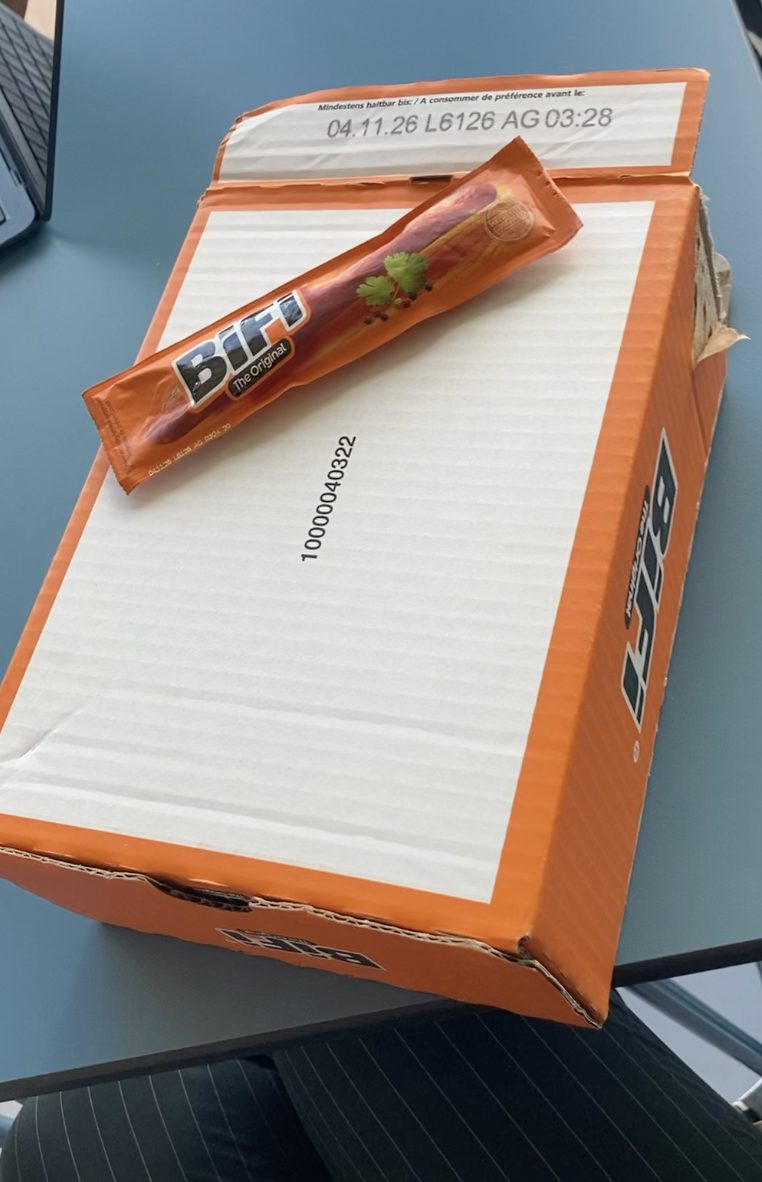
A best-before date describes the expected qualities of an unopened food stored correctly. It is not an automatic disposal date. A use-by date is different: food labelled this way should not be eaten after that date. The distinction is explained by the German Federal Centre for Nutrition.
The BiFi event focuses on packaged vending-machine products. For every food group, suitable approval, correct storage and a clearly organised handover are part of rescue. That applies to snacks as well as prepared canteen meals.
FOOD BE GOOD · INTERACTIVE MODEL
What goes into a snack?
A small snack already has a food footprint. Explore how the modelled footprint changes with the number of items, using a fixed calculation weight and source factor.
Event: 30 of 55 sausages redistributed in 30 minutes. The calculator compares a chosen number of one product variant, using 20 g per sausage.
In the scenarioRemaining stock in the model
30 × 20 g ÷ 1,000 × 8.24 = 4.94 kg CO₂e
Source and calculation
Classic: 20 g × 8.24 kg CO₂e/kg = 164.8 g CO₂e per comparison portion. The fixed factor comes from the AGRIBALYSE 3.2 “Salami” category model (code 30350), assigned by Open Food Facts to BiFi The Original . The standard calculation portion is 20 g; the product entry lists a 22.5 g pack. Accessed 29 October 2026.
For BiFi Turkey , the product entry does not provide an AGRIBALYSE factor. The variant selector makes this clear. The calculator compares variants; it does not represent how the 30 redistributed sausages were split between Classic and Turkey.
The result is an estimated category-based food footprint. It describes emissions associated with the comparison quantity, not measured emissions avoided by the event.
The link to canteens is right there in the vending machine
Many canteens also operate vending machines alongside their catering. They encounter packaged snacks, drinks and best-before dates just like Ramen Point. Food rescue need not begin only with hot lunch service.
Packaged goods offer a tangible starting point: quantities and dates are often directly visible, and items can be redistributed individually. Checking condition, storage and suitability remains essential. Watching stock early makes it possible to prepare an event before time pressure builds.
The rescue event addresses an immediate stock problem. Learning for the next order starts afterwards. Four questions help connect the two:
- What is left? Record initial stock, the amount actually handed out and remaining stock separately.
- Who does what? Agree payment, approval, communication and distribution in advance.
- What work is involved? Record extra steps, materials and working minutes.
- What changes next time? Use regular sales and feedback to inform orders and product frequency.
Giving something away shows whether a free offer is taken up. It does not automatically show demand at the regular price. A paid purchase of existing stock and a later reduction in purchasing costs are also two different financial effects.
Keeping those distinctions clear provides more than a good story. An event can lead to a better decision for the next purchase. Our article on measuring food waste shows how kitchens can systematically record quantities and causes.
Our next step: AI for better stock planning
Our conversation about approaching best-before dates and the event that followed show which information belongs together: product range, stock, actual sales and time remaining before the date. These insights inform our shared next step.
We’re building on these insights: Together with Julia Stepanova, who runs Ramen Point Viadrina, we plan to develop an AI-assisted solution. The aim is to estimate demand and stock more effectively, identify emerging surplus earlier and trigger suitable action in time. Experience from operating the vending machines provides the starting point.
Food Be Good connects this development with food rescue and clear communication. We make resource use tangible, bring people into conversation and make the business’s commitment visible.
Which foods regularly remain in your canteen? And what would need to happen for them to reach people in time?
Frequently asked questions about the BiFi event
Who took part in the food rescue?
Professor Georg Stadtmann, Julia Stepanova from Ramen Point Viadrina and Alice from Food Be Good took part in the event on the Viadrina campus.
What can canteens learn from it?
Product requests, regular sales and demand for a free offer provide different information. Record them separately and use them for the next quantity-planning decision.
Sources and further information
- European University Viadrina: startup project and product survey
- European University Viadrina: Professor Georg Stadtmann
- BZfE: food shelf life
- Open Food Facts: BiFi The Original – data behind the CO₂ model
- Open Food Facts: BiFi Turkey
Editorial team: Food Be Good · Photos: Food Be Good · Last editorial update: 29 October 2026.