
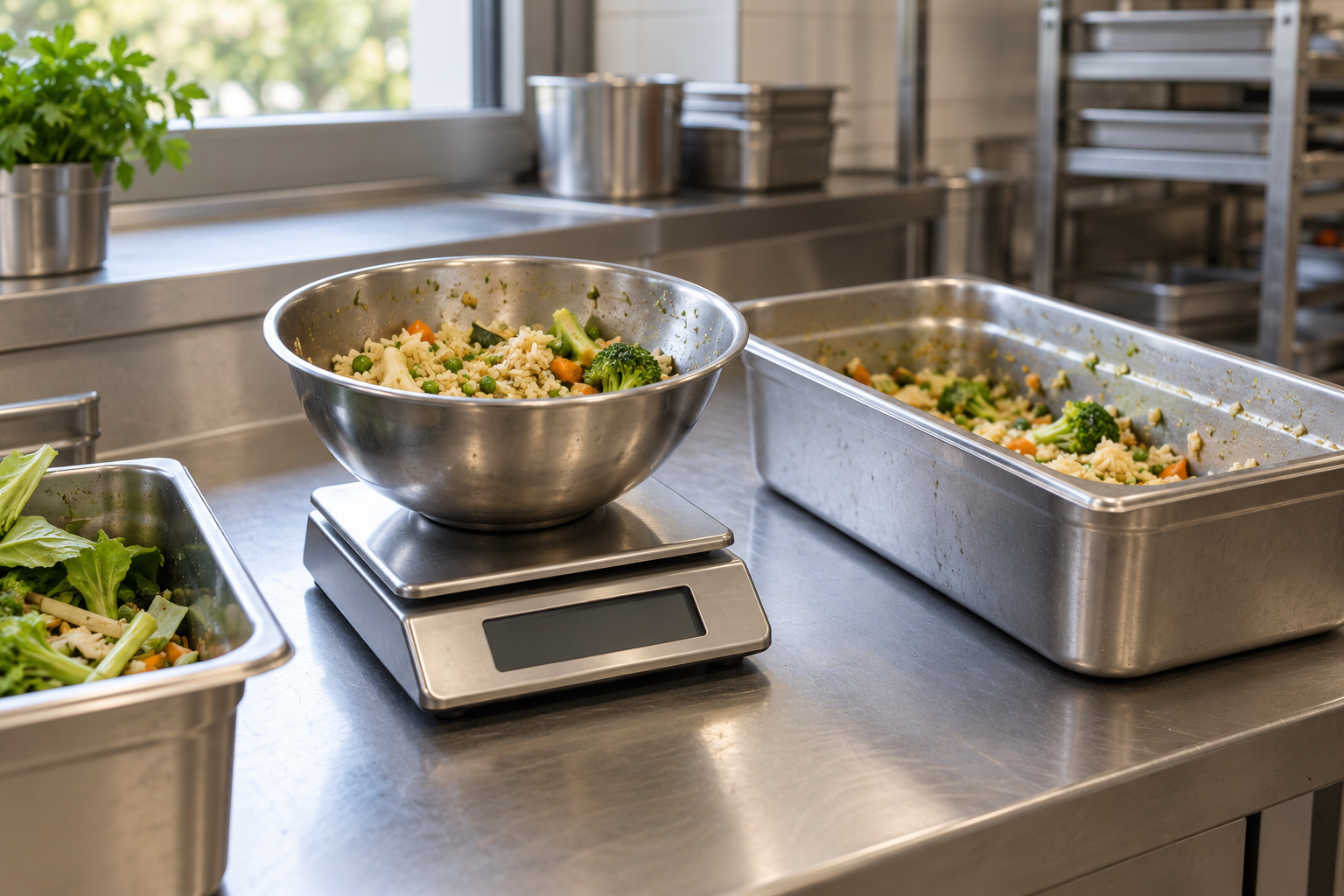
“We throw too much away” is an important signal, but not yet a basis for better decisions. A canteen can target food waste only when it knows which dishes remain, on which days and at which stage.
The good news: a robust start does not require complex management systems. With a scale, simple records and five metrics, kitchen managers can spot the greatest opportunities within a few weeks.
Key points
- Measure overproduction, unserved food and plate waste separately.
- Also record planned and actual guest numbers.
- Compare kilograms, figures per guest and production volume.
- Measure at least ten catering days, ideally a complete menu cycle.
- Use the results to make a specific adjustment.
Why measure canteen food waste?
Food waste does not arise at a single point. Overproduction usually indicates a mismatch in quantity planning. Unserved food can result from replenishing too early or too generously. Plate waste often indicates a mismatch between portion size, recipe and acceptance.
Putting all leftovers in one bin loses that information. Keeping them separate makes targeted measures possible.
The five metrics
1. Total food waste
This figure shows the scale of the issue. Alone, it is not enough to explain the cause.
2. Food waste rate
The rate makes days with different guest numbers comparable. The ratio matters.
3. Plate waste per guest
If the figure rises for particular dishes or weekdays, review portions, recipes and guest feedback.
4. Unserved food per guest
High levels of unserved food often suggest too much was produced or put out at once. Smaller batches and clearer replenishment rules can help.
5. Difference between planned and actual guests
Also note weather, shift changes, remote-working days, exams or company events. This turns numbers into useful patterns.
How to start measuring
1. Choose a clear period
Measure at least ten catering days, ideally a complete menu cycle. Individual days can vary sharply due to holidays, heat or special events.
2. Collect waste categories separately
Use separate, clearly labelled containers for overproduction, unserved food and plate waste. Where possible, record notable components individually.
3. Add guest numbers and production volume
Record planned guests, actual guests and the quantity produced. Without these reference figures, the cause of high leftovers remains unclear.
4. Review weekly with the team
A short 15-minute meeting is enough: what stood out? What cause seems plausible? Which single adjustment will we test next week?
Example: how numbers lead to action
Suppose a canteen finds that a vegetarian dish leaves much more unserved food on Fridays than on other days. Actual Friday guest numbers also consistently fall below the plan.
The kitchen can reduce Friday’s initial production quantity, cook more in smaller batches and measure again after two weeks. If unserved food falls without guests missing out, the measure has worked.
Calculate with your own data: the canteen food waste check
Common mistakes
- Measuring only the total: the cause stays hidden.
- Measuring without guest numbers: days remain incomparable.
- Deciding after two days: chance is mistaken for a pattern.
- Collecting data without changing anything.
- Leaving the team out.
Frequently asked questions
How long should a canteen measure food waste?
At least ten catering days, ideally a complete menu cycle.
Which food waste should a canteen record separately?
Overproduction, unserved food and plate waste. Guest numbers, production volume and notable meal components are also important.
How much can a canteen reduce food waste?
That depends heavily on the starting point. Only measurements in your own operation show which savings are realistic.
Sources and notes
NRW Canteen Programme: measuring and analysing food waste. German consumer advice centres: eating out. German Nutrition Society, Lower Saxony: valuing food. Updated October 2026.