From five minutes
Additional serving time per day.
 Book a conversation
FOR WORKPLACE CANTEENS
Fixed compensation. Paid in advance.
Redistribute surplus after regular service through a subscription. Scheduled pickups, fixed compensation for your canteen and impact reports on recorded collections.
Discuss the process and compensation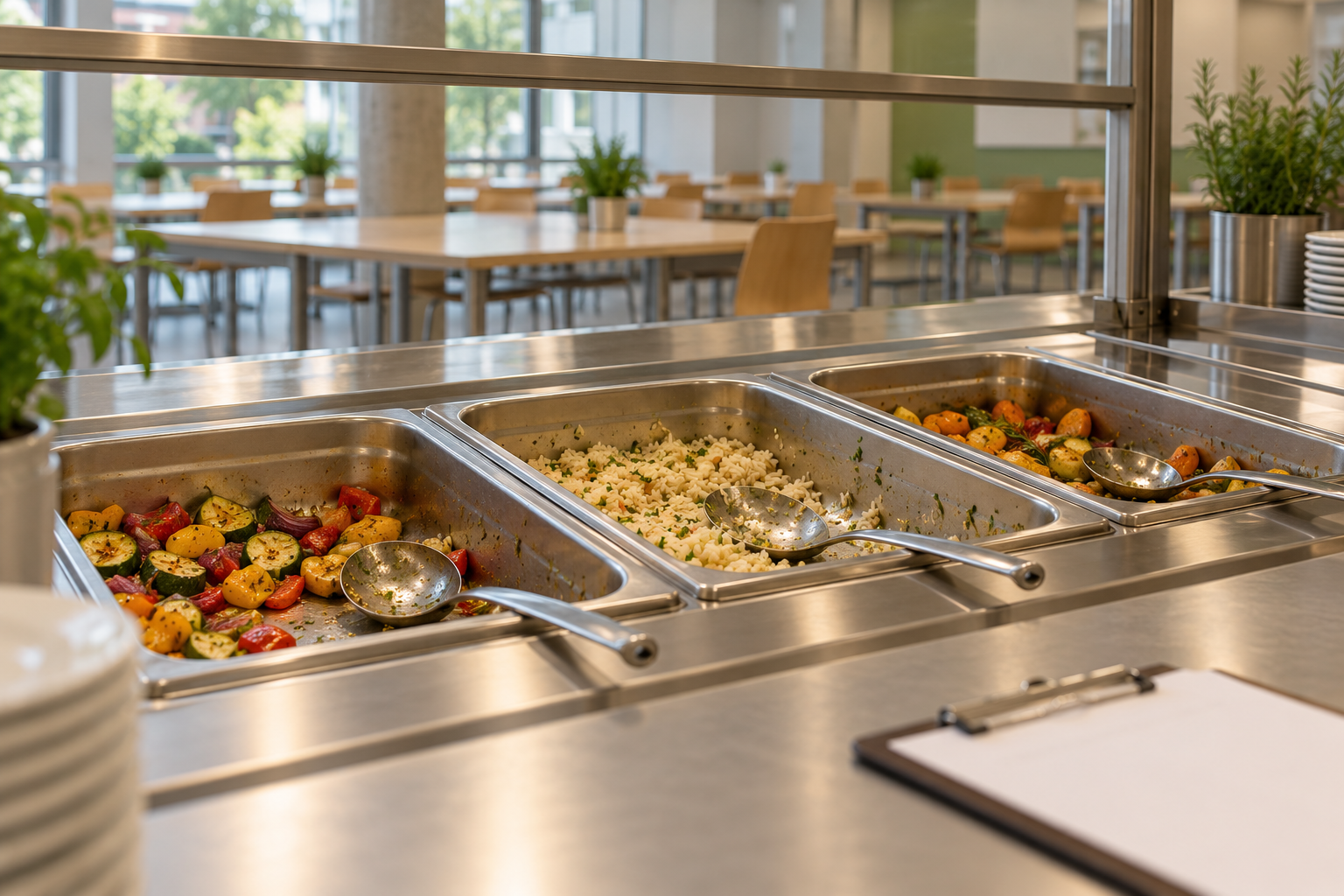
Additional serving time per day.
Agreed compensation paid before the service period begins.
Limited access, set times. Your kitchen approves the food.
PLAN YOUR SURPLUS PICKUPS
You know when collections happen, who has access and what compensation is agreed. Your regular service comes first.
If no meals remain, your canteen is not required to provide food. This is clearly covered in subscribers’ user agreements.
TWO STOCK PHOTOS. ONE CLEAR PROCESS.
Your team gets app access. We agree scheduled pickups and compensation, and organise subscriber access.
Before the first subscriber arrives, your team photographs the approved starting stock in the canteen app.
Subscribers collect food in their own containers and photograph their meals in their own app.
After the last subscriber leaves, your team photographs the remaining stock. This photo-based process requires no weighing.
THE CANTEEN APP
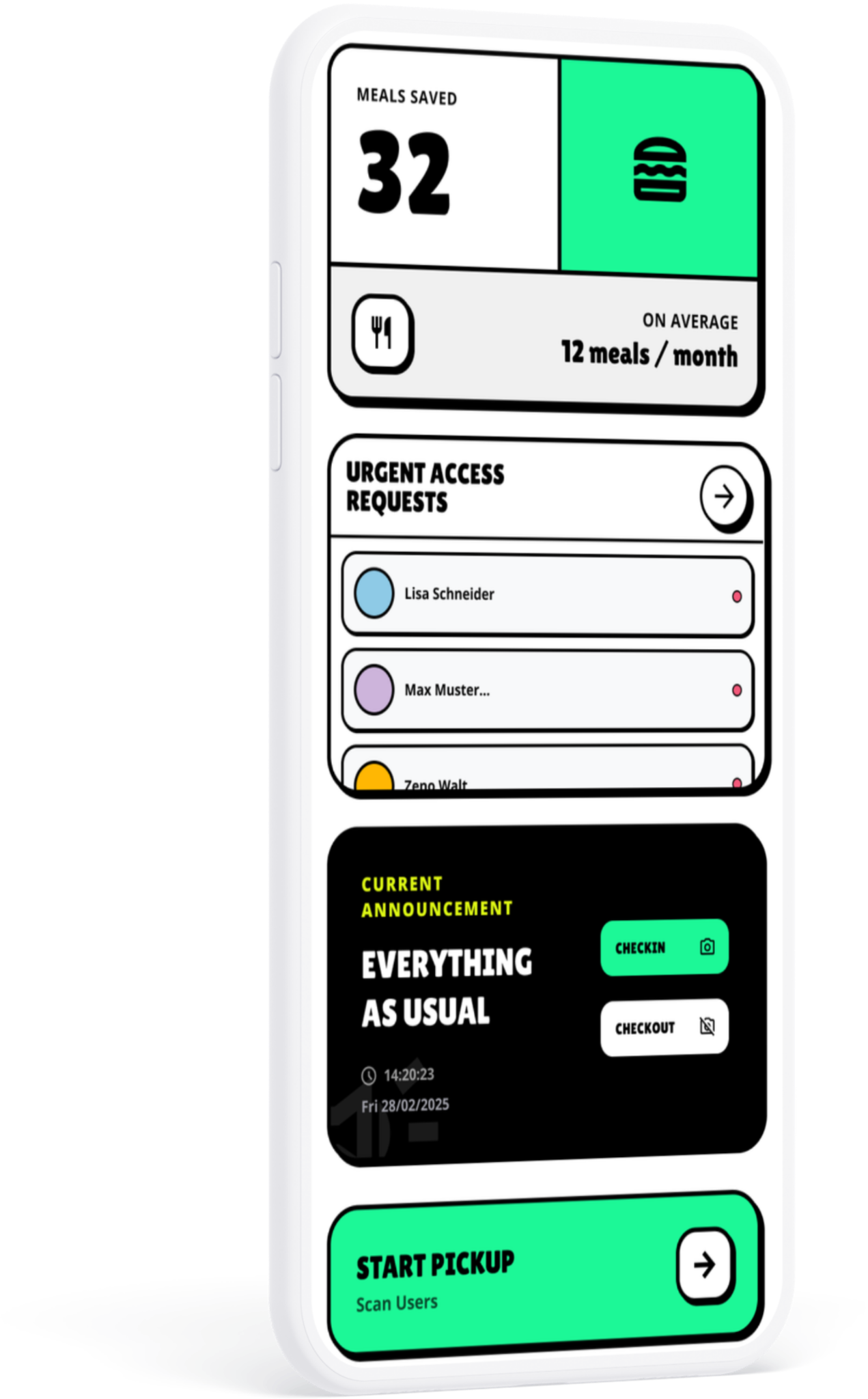
Manage access and collections digitally. Food decisions stay on site.
A check-in photo before the first pickup.
A check-out photo after the last pickup.
Subscribers photograph their own meals. Your team doesn’t need to weigh individual portions.
IMPACT REPORTS ON FOOD REDISTRIBUTION
Our impact reports show recorded meals, collection frequency and estimated quantities. Subscribers provide the meal photos; AI-assisted analysis estimates the amounts. Recipe data supports the calculation of estimated CO₂ equivalents.
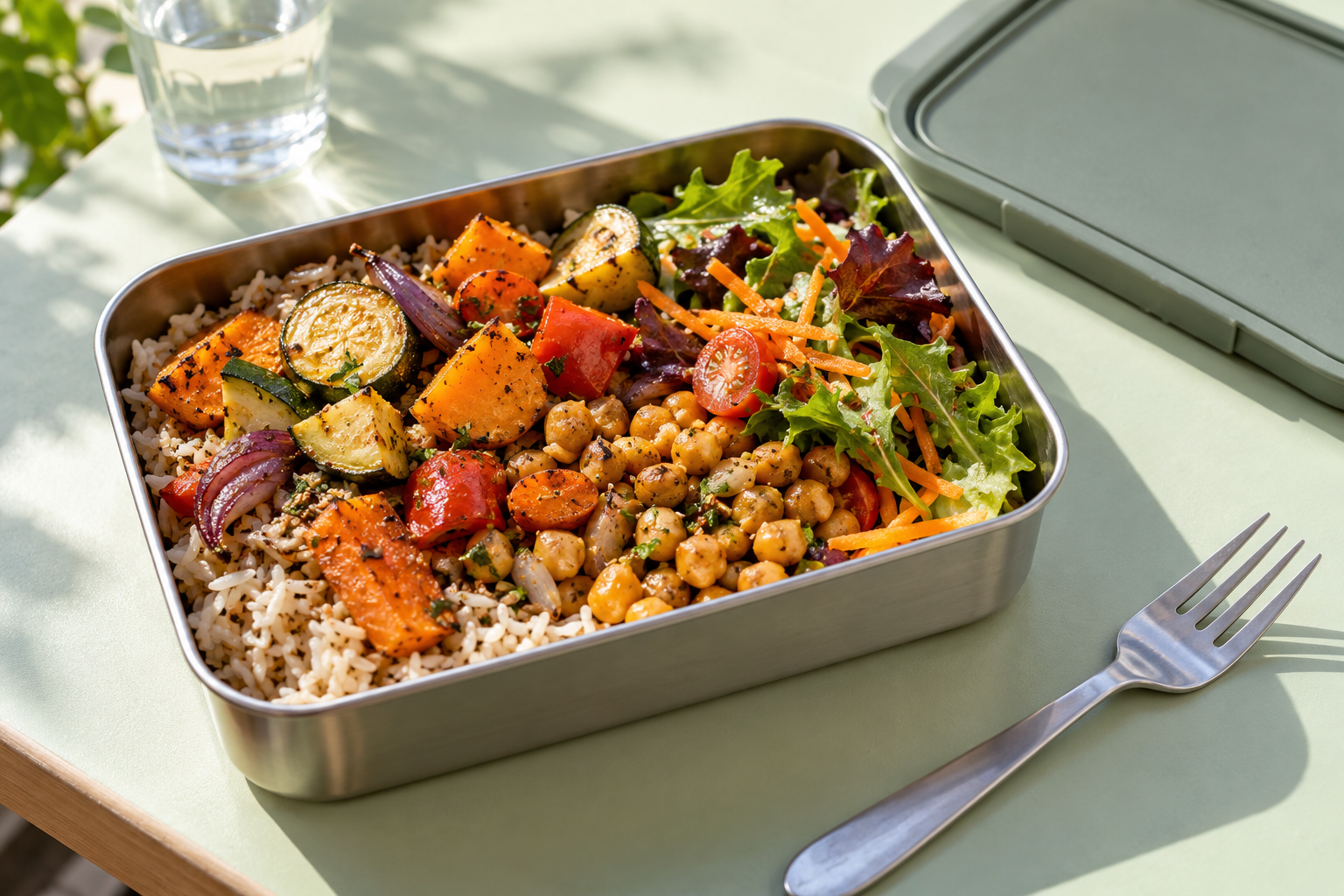 Example image · AI-generated
STOCK PHOTOS
The canteen records stock before and after collection.
PICKUP PHOTOS
AI-assisted analysis of meal photos. No gram-level measurement.
RECIPE DATA + ESTIMATED QUANTITY
Present expected CO₂ savings as a model-based estimate.
PUT THE DATA IN CONTEXT
Which meals were collected and how often, supported by pickup confirmations, stock photos and meal photos.
The amount visible in a photo and the CO₂ equivalents calculated from it using recipe data.
Identify recurring surplus and consider it alongside dishes and guest numbers.
In development: AI-assisted guest forecasts to support your production planning.
GET STARTED TOGETHER
We start with your schedules, responsibilities and routines. Together, we establish which food is suitable, who manages access and when pickup makes sense.
Responsibility for food safety and approval remains with the food business. Photo analysis does not replace hygiene checks. A precise waste balance requires additional measurements; these are not a prerequisite for the pickup process described here.
FREQUENTLY ASKED QUESTIONS
Additional serving time starts at five minutes a day. Your canteen receives fixed compensation before the agreed service period begins.
Suitability depends on your serving and closing times. Together, we discuss a clearly defined pickup window after regular service. We don’t promise a one-size-fits-all schedule.
Prepared food that was not needed for regular service. Your kitchen decides which of it can be redistributed under the applicable requirements.
The responsible kitchen decides on quality, hygiene, quantity and availability. Food Be Good does not replace this assessment. If there is no surplus, there is no obligation to serve. This is covered in subscribers’ user agreements.
Digital access and on-site pickup confirmation are central to the process. We’ll review your site’s technical setup together.
Compare similar weekdays, dishes and guest numbers alongside the stock photos. Photo analysis provides estimated quantities. Additional production and waste data can show whether overproduction is actually falling.
THE NEXT STEP
Tell us when service ends and how you currently handle suitable surplus. Together, we’ll explore a process that fits.
We start with a conversation. Availability and conditions are agreed individually.
Food Be Good for university cateringIllustration · AI-generatedCOSTS & THE EU DEADLINE
Understand food losses, the June 2027 deadline and how to redistribute suitable surplus.
Read: food waste and the EU’s 2027 deadline