
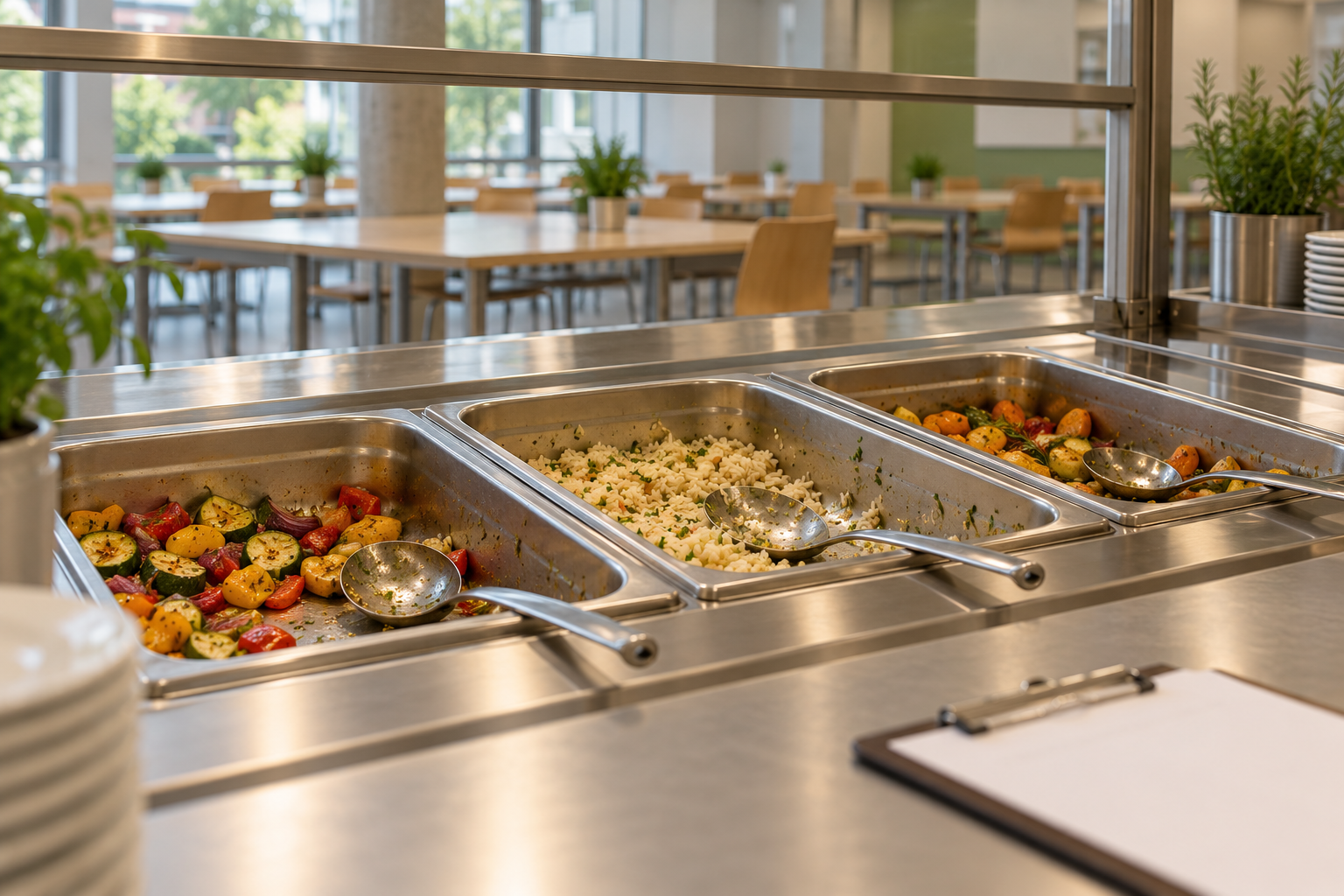
Food waste in catering rarely has a single cause. In a university canteen, demand changes with exams, teaching schedules and campus locations. In workplace canteens, remote work, shifts, meetings, holidays and workforce composition affect daily sales.
Yet the task remains the same: produce as accurately as possible, maintain quality through service and reduce avoidable waste. This article shows which differences between university and workplace canteens matter, and which measures work in both settings.
Key points
- Food waste mainly arises from overproduction, unserved food and plate waste.
- University canteens need particularly flexible planning for highly variable guest numbers.
- In workplace canteens, attendance, shifts and remote working are often key demand factors.
- Measuring waste by cause helps improve production quantities, service and menus.
- Suitable surplus always needs a clear process supported by hygiene procedures.
Why food waste happens
A clear distinction helps in practice: overproduction happens before service. Unserved food remains in trays or at the counter. Plate waste comes back from the dining area. This separation shows where change could help. Large quantities of plate waste need a different solution from a full serving tray at the end of the day.
University or workplace canteen: the differences at a glance
| Topic | University canteen | Workplace canteen |
|---|---|---|
| Demand | Strongly influenced by timetables, exams, term breaks and weather | Strongly influenced by attendance, shifts, meetings, holidays and remote work |
| Price and offer | High price sensitivity, changing audiences and menu trends | Regular guests, often shorter lunch breaks and more predictable baseline patterns |
| Typical risk | Large fluctuations between weekdays and dishes | Short-notice changes due to hybrid working or company events |
| Particularly useful data | Guest numbers by site, dish and time window | Attendance, shift patterns, pre-orders and menu sales |
Three ways to reduce food waste in university canteens
1. Understand guest numbers by time window
Total guest numbers are only part of the picture. Production planning needs to know when students arrive and which dishes they choose. Analysis by canteen, weekday, time and dish reveals recurring patterns.
2. Connect menus with actual acceptance
Regular feedback, sales data and plate waste help distinguish a one-off poor performance from a dish that consistently lacks acceptance.
3. Cook additional food in small batches
Where kitchen operations allow, batch cooking reduces the risk of large quantities left unserved. Food safety and the site’s hygiene procedures must be followed consistently.
Three ways to reduce food waste in workplace canteens
1. Account for attendance and shifts
When office attendance fluctuates, historical averages alone are not enough. Information on shifts, company events, days between public holidays and weekends, or agreed office days makes forecasts more robust.
2. Make pre-ordering or feedback easy
An ordering system need not be complicated. What matters is that people use it reliably and the kitchen can derive a useful number from it.
3. Offer flexible portion sizes
Small and large portions, plus an option for seconds, help align demand and service. Measure the effect and adjust together with the serving team.
The shared foundation: measure for ten days, then decide
Before committing to major changes, measure across at least ten catering days, ideally a complete menu cycle. Record each day’s:
- planned and actual guest numbers,
- production volume,
- overproduction, unserved food and plate waste separately,
- affected meal components,
- unusual events such as remote-working days, exams, heat or company events.
Calculate with your own data: the canteen food waste check
What happens to suitable surplus?
Prevention comes first. If overproduction still occurs, reuse or redistribution must stay within the site’s hygiene procedures. Assessment by the responsible kitchen manager and a traceable time-and-temperature history are essential. The responsible kitchen decides whether unserved food is suitable for redistribution under its hygiene process. Plate waste is treated separately.
Frequently asked questions
How can a university canteen reduce food waste?
Start by measuring overproduction, unserved food and plate waste separately. Alongside guest numbers, dish sales and feedback, this creates concrete starting points.
Why do workplace canteens generate so much leftover food?
Common causes include fluctuating attendance, remote work, holidays, shift changes, large portions or production volumes that do not match actual demand.
Can canteens significantly reduce food waste?
Yes. The actual amount depends on the site, production system, menu and starting point.
Sources and notes
German consumer advice centres: eating out. German Environment Agency: better food in workplace and university canteens. NRW Canteen Programme: tips for low-waste catering. Updated October 2026.